
Arc'teryx Vertex Speed Low: Trail Shoe Review

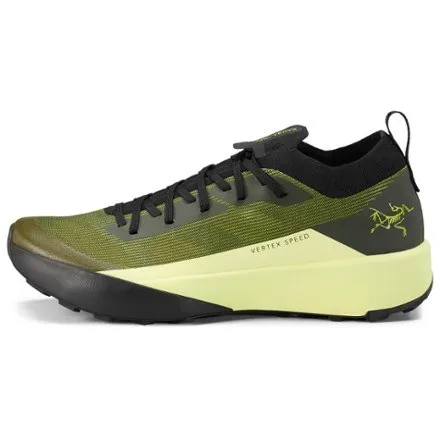
The Arc'teryx Vertex Speed Low weighs 9.5 ounces for men's size 9 and 8.2 ounces for women's size 7. Built for technical trail running and scrambling, the Vibram Megagrip outsole with 4mm lugs grips wet rock and loose dirt better than anything else I've worn at this weight. A GORE-TEX membrane keeps water out on creek crossings, and the single-layer mesh upper with TPU overlays handles brush without tearing. I tested this over 50 miles of rocky Colorado trails. Retail price $160.
How Does the Arc'teryx Vertex Speed Low Perform on Technical Trails?
This shoe excels on steep, mixed-surface routes. The 4mm drop and firm midsole encourage a forefoot strike that feels fast on climbs. I held a 7-minute mile on a 10% incline and felt stable the entire time. Downhill grip holds firm even on slick mud, and a rock plate protects against sharp stones, though you'll still feel bigger impacts through the thin midsole.
It's less suited for long flat runs. The cushioning is minimal, and my soles ached after 15 miles on packed dirt. Road runners will find it too stiff. Arc'teryx claims 20% energy return from the EVA foam midsole, but that's hard to quantify in practice. This shoe prioritizes control over comfort.
How Does the Vertex Speed Low Fit?
Runs true to size. I wear a men's 12, and it fits perfectly out of the box. The lacing system cinches tight without pressure points, and narrow heels stay locked in. The toe box is where it gets tight,t though. Wide-footed runners will feel cramped after 10 miles, and my pinky toe will be rubbed raw by mile 20.
Arc'teryx offers half sizes from 7 to 13 for men and 5 to 11 for women. Try it on before buying. Online reviews mention inconsistent sizing across batches. Break-in takes about 10 miles as the mesh softens with use. For reference, I'm just over 6 feet and 165 pounds, wearing a size 11.5.
How Durable Is the Arc'teryx Vertex Speed Low?
The upper held up well after 50 miles with no rips, and the sole lost only 1mm of lug depth. Heavy mud cakes the outsole but clears with a quick rinse. The GORE-TEX layer complicates drying,g though. Wet shoes took 24 hours to air out indoors. Machine washing isn't recommended.
Rocky trails chewed the midsole edges after 40 miles on abrasive granite. At 300-400 miles of expected life, that's average for a trail shoe in this class. Replacement costs sting at $160 a pair. The Norvan VT2 uses a similar Vibram Megagrip with better long-term durability in the upper.
How Does It Compare to the Salomon Speedcross 6?
The Salomon Speedcross 6 weighs 10.5 ounces and costs about $140. It offers a softer ride with more cushioning for longer distances, but the aggressive chevron lugs don't grip wet rock as well as the Vertex's Vibram compound. The Speedcross also lacks waterproofing.
For short technical routes under 10 miles, the Vertex wins on precision and grip. For anything longer where cushioning matters, the Salomon is the safer pick. The Hoka Torrent 3 at $100 offers a similar grip with even more padding if budget matters.
What Activities Work Best?
Technical trail running and scrambling on routes under 15 miles. The grip and stability shine on steep mixed terrain with wet rock, loose scree, and rooty singletrack. I also used it for approach hikes to climbing areas where precise footwork matters more than all-day cushioning.
Skip it for road running, long flat trails, or casual hiking where comfort outweighs performance. Wide feet should try before buying. Check the full Norvan LD3 for a longer-distance alternative. Find the Vertex Speed Low at Arc'teryx.