
Arc'teryx Nanton Jacket

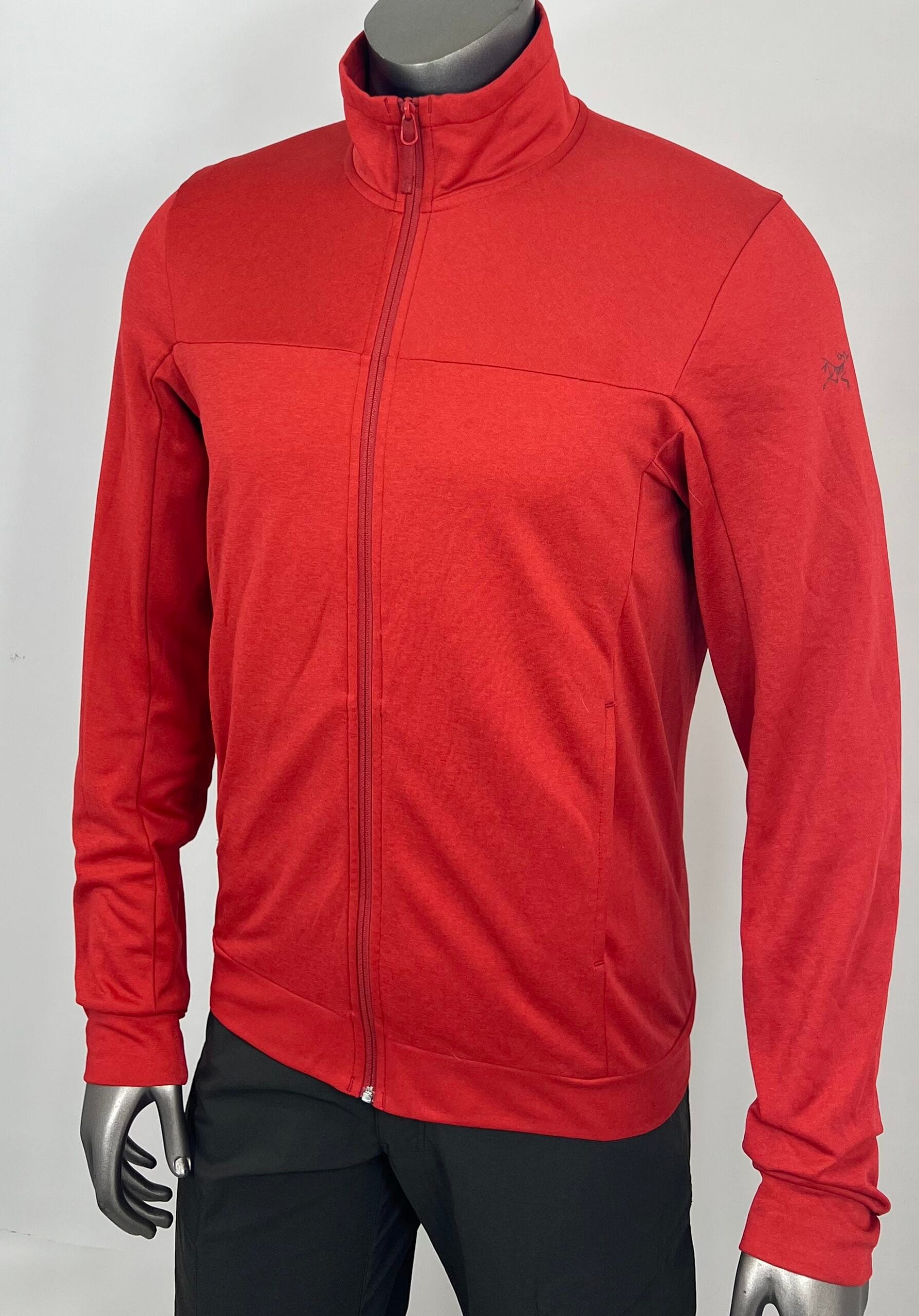
The Arc'teryx Nanton Jacket weighs 310 grams and sits in that perfect middle ground between a base layer and a midlayer. Arc'teryx discontinued this piece a few years back, but I bought mine secondhand specifically for running after reading it blocks wind better than most fleeces. It does.
I know Arc'teryx designed the Nanton for urban cyclists. The longer back hem, the trim fit, the articulated elbows - all of that makes sense for someone bent over handlebars. I don't care. I run in it, and it works great for that too. The Alwyn polyester fleece is lightweight enough that I don't overheat on fast efforts, but substantial enough to cut the wind when I'm exposed on ridge runs or dealing with cold morning air.
The fleece has a heathered face and a brushed back. That brushed interior feels soft against skin or over a thin base layer like my Arc'teryx Motus Crew. The face fabric blocks more wind than you'd expect from a 178 g/m² fleece. It's not windproof like a shell, but it's significantly more wind-resistant than standard grid fleece or microfleece.
Why the Arc'teryx Nanton Jacket Works for Running
Wind protection is the main reason I bought this jacket. Most fleeces let wind pass right through. The Nanton doesn't. I've worn it on exposed runs when wind gusts were strong enough to slow my pace, and the fleece blocked enough of it that I stayed comfortable. The fabric isn't thick or heavy. It just has a tighter weave than typical fleece.
The trim fit matters more than I expected. There's no excess fabric flapping around as I move. The jacket stays close to my body without restricting movement. Arc'teryx used articulated elbows and underarm gussets to allow a full range of motion. I can reach overhead, twist to look behind me, or pump my arms hard without the jacket binding or riding up.
The mid-height collar seals well without choking. When it's particularly cold or windy, I can zip all the way up and get good coverage around my neck. When I start warming up, I drop the zip halfway, and the chest opens up for ventilation. No chin guard or fleece is lining the zipper, which some people might miss, but I don't find the bare zipper uncomfortable.
Arc'teryx Nanton Jacket Temperature Performance
I've used this fleece in temperatures ranging from 25°F to 50°F. Below 25°F, I need more insulation or layer it under a shell. Above 50°F, it's too warm unless I'm at high elevation or facing strong wind. The sweet spot is probably 30-45°F for high-output running.
At 310g, the Nanton provides more warmth than ultralight fleeces but less than heavier grid fleeces or synthetic insulated pieces. It's right in the middle. That makes it versatile for shoulder season - late fall, early spring, those unpredictable weather windows where you're not sure if you'll be too hot or too cold.
The breathability is good. Not as good as a dedicated running piece like the Arc'teryx Incendo Hoody, but better than I expected from a wind-resistant fleece. I can maintain a hard effort for 30-40 minutes without overheating, as long as the temperature is below 40°F. Above that, I start building up too much heat.
The Pocket Situation
The Nanton has two hand pockets with hidden zippers inside the pocket openings. It's a clean look, but functionally just okay. The pockets are deep enough for a phone or gels, but the openings are positioned more horizontally than vertically. This works for cycling but feels awkward when running.
I can get my phone in and out, but it's not as smooth as pockets on running-specific pieces. The zippers are reverse coil and glide smoothly. No chest pocket, which I'd prefer for running. But this wasn't designed for runners.
Durability and Construction
The Alwyn fleece has held up well after years of regular use. No pilling, no tears, no issues with the zippers. The brushed interior hasn't flattened out or lost its softness. I wash it on cold and hang dry, and it comes out looking like new every time.
Arc'teryx used flatlock seams throughout. These sit flat against the skin and don't create pressure points or chafing. The stitching is clean and precise. All the details you'd expect from Arc'teryx are here - clean finishes, no loose threads, careful attention to how seams align.
The longer back hem is the one design element I don't use. It's cut to provide coverage when you're bent forward on a bike. When I'm running upright, the extra length hangs there. It's not a problem - it doesn't ride up or get in the way - but it's also not providing any benefit. If Arc'teryx ever brings this jacket back (they won't), I'd vote for a running-specific version with a standard hem length.
How the Arc'teryx Nanton Jacket Compares
The Nanton sits in a weird spot in Arc'teryx's discontinued lineup. It's specifically built for urban cycling, which means it has features that work well for other activities but weren't optimized for them.
Compared to the Patagonia R1, the Nanton is trimmer and more urban-looking. The R1 is bulkier and has better breathability thanks to its grid fleece construction, but doesn't block wind as well.
What You Need to Know About Fit
The trim fit runs true to size but is a bit snug. I'm just over 6 feet," and 165 lbs, and a medium fits me perfectly over a thin base layer. There's just enough room to move without excess fabric. If you're planning to layer a thicker base layer or a light insulated piece underneath, you might want to size up.
The sleeves are long enough that they don't ride up when I'm running. The cuffs are plain-cut with no elastic or thumb loops. They stay in place well. The articulated elbows make a real difference - I can bend my arms fully without restriction.