
Arc'teryx Incendo Hoody

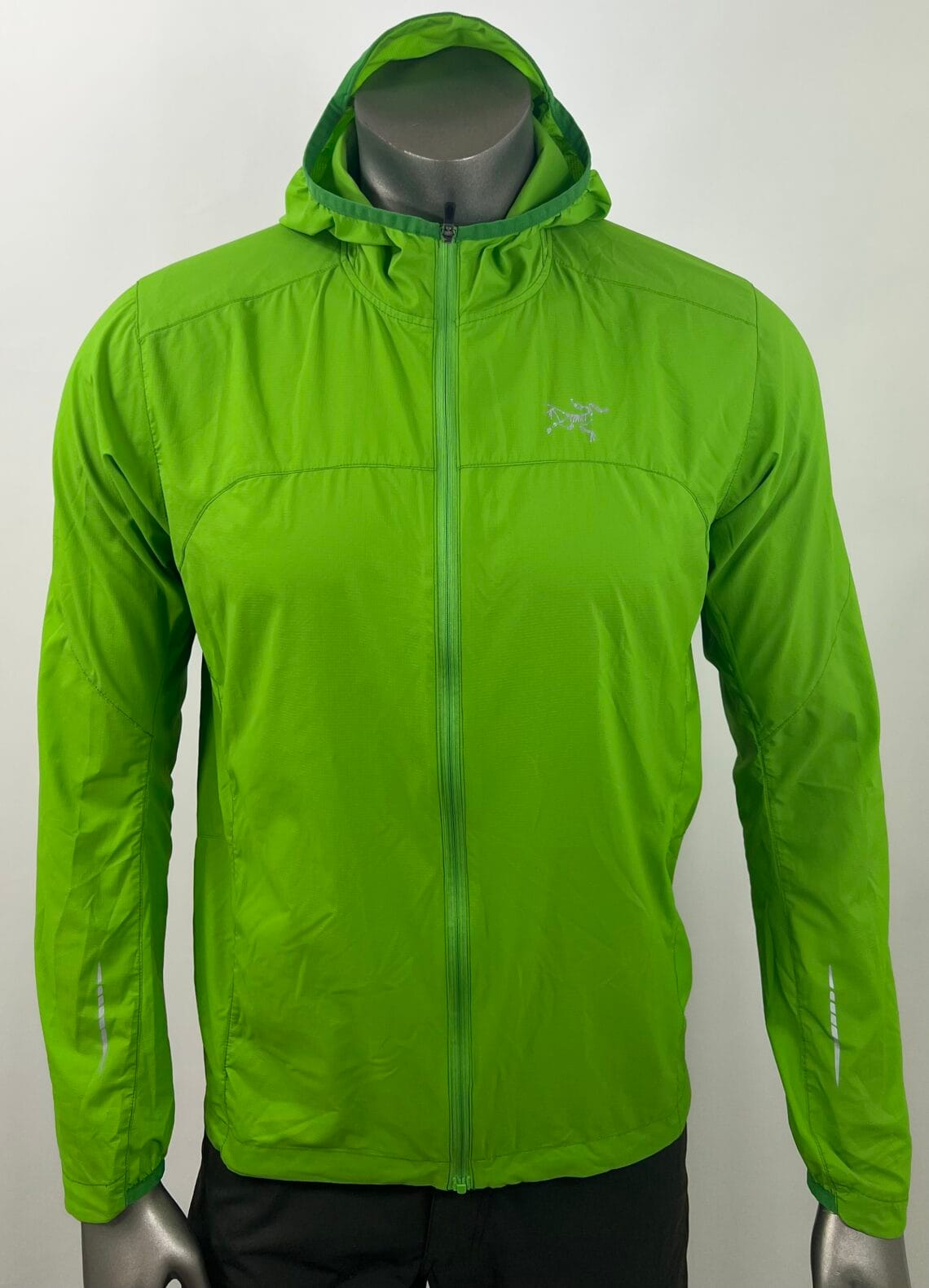
The Arc'teryx Incendo Hoody weighs 135 grams (4.8 oz) and uses 100% Lumin nylon with large mesh underarm panels for ventilation. This is an ultralight running shell, not a rain jacket. The DWR finish handles drizzle and morning dew but wets out in sustained rain. It packs into its own chest pocket to a size smaller than a fist, which makes it easy to stash in a running vest or jacket pocket when conditions are uncertain. Priced around $150-240 depending on version and retailer. Best between 40 and 60°F during trail running and other high-output activities.
Lumin Nylon with Mesh Underarm Venting
The Lumin nylon blocks wind effectively for something this thin. The DWR coating sheds light precipitation, but the design heavily favors breathability over waterproofing. The mesh underarm panels provide significant airflow during hard efforts, preventing the overheating that solid-construction windshells create.
When this does get wet, the ultralight fabric barely holds water. It keeps performing even soaked, which matters more during a run than staying perfectly dry. Just don't store your phone in the chest pocket during a forecast downpour. The Squamish Hoody provides slightly better weather protection at a weight penalty.
How Does the Arc'teryx Incendo Hoody Fit?
Slim and athletic. At just over 6 feet and 165 pounds, I wear a medium that sits close to the body without restricting arm swing. The shoulder mobility is excellent, a benefit of Arc'teryx's climbing design heritage showing up in a running piece. The hood stays wrapped tight during runs without flapping or shifting.
The tiny zipper is the main design flaw. It's difficult to grab with sweaty or cold fingers, and putting the jacket on mid-run requires more fumbling than it should. The chest snap lets you run with the zip partially open for ventilation. The hood rolls up and snaps to the collar when you don't need it.
Best for 40-60°F Trail and Road Running
This hits the sweet spot for cool-weather running where wind and light precipitation are concerns but you don't want to carry a heavy shell. Between 40 and 60°F, the breathability keeps you from overheating while the Lumin nylon cuts wind on exposed stretches. Below 40°F, you'll want something with more insulation or a fleece underneath.
The reflective blazes provide visibility for early morning or evening road running. Available in bold colors like Toreador and Cardinal for high visibility, plus neutral options like Black and Anvil. The slim fit looks sporty but works for casual wear with the Cormac Crew or Motus Crew underneath.
Arc'teryx Incendo vs. Patagonia Houdini and Squamish
The Patagonia Houdini weighs around 105 grams and packs even smaller. The Houdini blocks wind better but doesn't breathe as well, missing the mesh underarm venting. Pick the Houdini for pure wind protection, pick the Incendo when breathability during sustained effort matters more.
The Squamish Hoody from Arc'teryx weighs more (140g) and provides better overall weather protection with less airflow. The Incendo beats both for high-output running where overheating is a bigger threat than getting wet.
Ultralight Protection for Runners Who Count Grams
For trail and road runners who want a just-in-case shell that disappears into a vest pocket, the Incendo delivers. The breathability during sustained effort sets it apart from heavier windshells. The tiny zipper is annoying. The mesh panels sacrifice total weather protection for airflow. These are deliberate trade-offs for a 135g running shell.
Check Arc'teryx for current availability. For cooler conditions below 40°F, pair it with the Aptin Zip Hoody or look at the Norvan LD3 for running-specific footwear.