Arc'teryx Alpha SV Jacket: Every Version

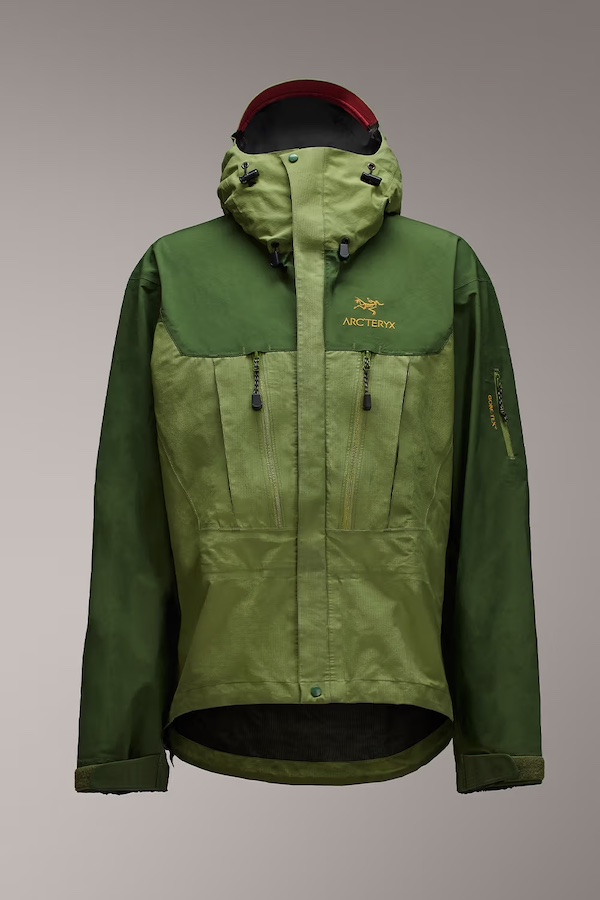
The Arc'teryx Alpha SV Jacket debuted in 1998 as the company's first flagship shell. It weighed 708 grams in a men's medium. The current version weighs 485 grams. That's a 31% weight reduction across 27 years of production, and the jacket has never once left the lineup. Model X000009899. $900. Sizes XS through XXL.
Arc'teryx started developing the Alpha SV in 1995, three years before it shipped. They'd never made a piece of clothing. Just harnesses and packs. Gore took a chance on them anyway, making Arc'teryx the first GORE-TEX-licensed brand with no apparel experience. Co-founder Jeremy Guard had been climbing in the flat, baggy, barely-sealed shells of the mid-90s and knew Arc'teryx could do better. So the company assembled a small team of climber-designers: Tom, Mike, and Cheryl. They made patterns, sewed prototypes, and modified their own machinery. Tom built the jacket he wanted for ice climbing. If it didn't work, he'd know firsthand.
Arc'teryx bet the company on it. The team pulled 15-hour days and slept at the factory. They were literally finishing jackets in the back of a van on the way to their first Outdoor Retailer show. At launch, the Alpha SV weighed 300 grams less than any other model on the market. It stopped people cold at OR.
The 1998 Arc'teryx Alpha SV Original
The first Alpha SV used 420NR high-tenacity ripstop nylon with false-twist textured yarns, a heat-setting process that bulks the weave and reduces frayed fibers. Those frayed ends are the main reason fabrics wet out over time. The 530N abrasion-resistant reinforcement covered high-wear zones. Three-layer GORE-TEX laminate. 708 grams for men, 620 grams for women. Four colors: Molten, Alpine, Stone, and Shadow. SKU MGJ8-05-101 through MGJ8-05-401.
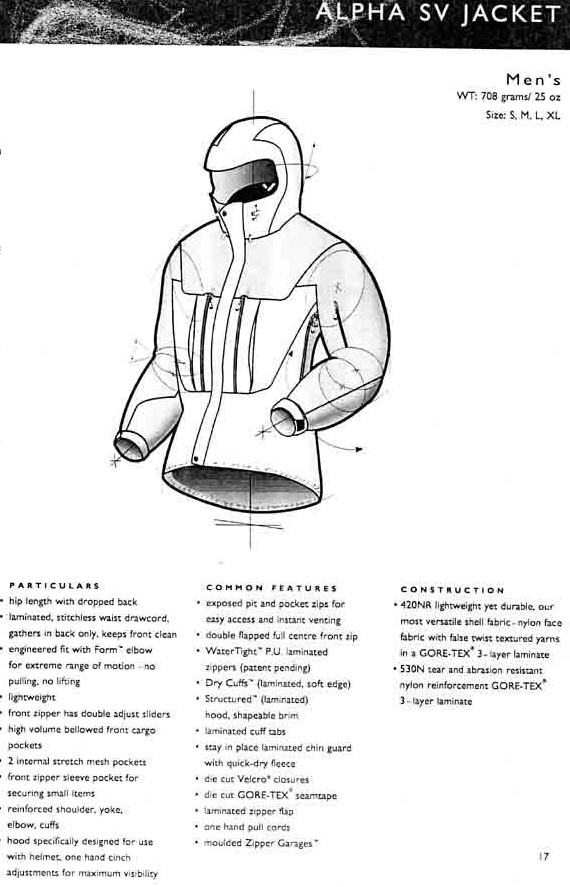
It introduced almost every construction detail that defined Arc'teryx shells for the next two decades. Narrow GORE-TEX seam tape at 11/16 inch cut tape bulk by 20%. The machines at the time only cut 17mm tape, so Arc'teryx hand-cut theirs narrower, ripping through 50-meter rolls by hand. Seams trimmed to 3/16 inch. WaterTight zippers (patent pending at the time), Moulded Zipper Garages, laminated Dry Cuffs, a Structured Hood, and stitchless laminated drawcords. The Alpha SV was the first jacket to incorporate all of them. Arc'teryx pushed Gore to develop that narrower seam tape, and Gore later rolled it out to their other brand partners.
What Arc'teryx Patented
Three years after the Alpha SV shipped, Tom Fayle filed US Patent 6,654,963 with co-inventor Thomas R. Routh. The same climber-designer who led the original project. Granted December 2, 2003, and assigned to Arc'Teryx Equipment, Inc., the patent covers innovations developed during the Alpha SV's early production years, refined versions of what first appeared in the 1998 jacket.
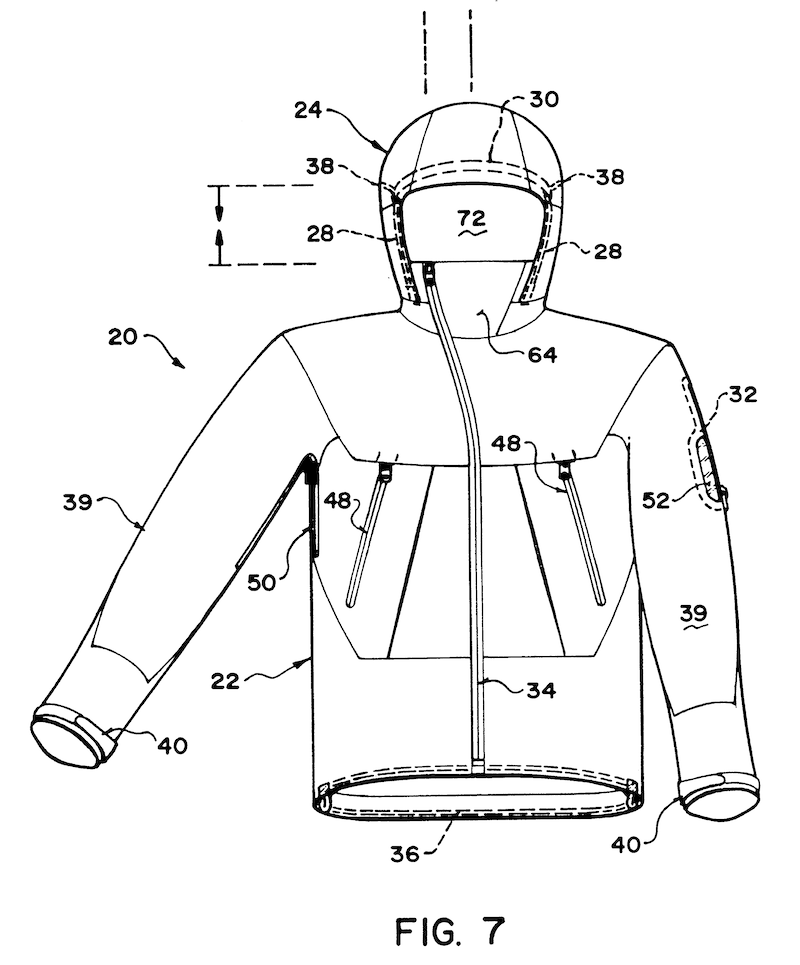
The first is the single-pull hood adjustment. One drawstring simultaneously tensions both the vertical face opening and the circumferential top-of-head fit, while leaving the brim free to protrude. Previous hoods required two or three separate pulls. The second is the curved front zipper. The slide fastener runs vertically up the chest, then curves laterally at the collar so the slider ends up offset from the wearer's mouth when fully zipped. No metal touching your chin at minus 20. Arc'teryx achieved the permanent curve by fitting a straight YKK zipper into a curved template and bonding a thermoplastic polyurethane backing at 330 degrees Fahrenheit.
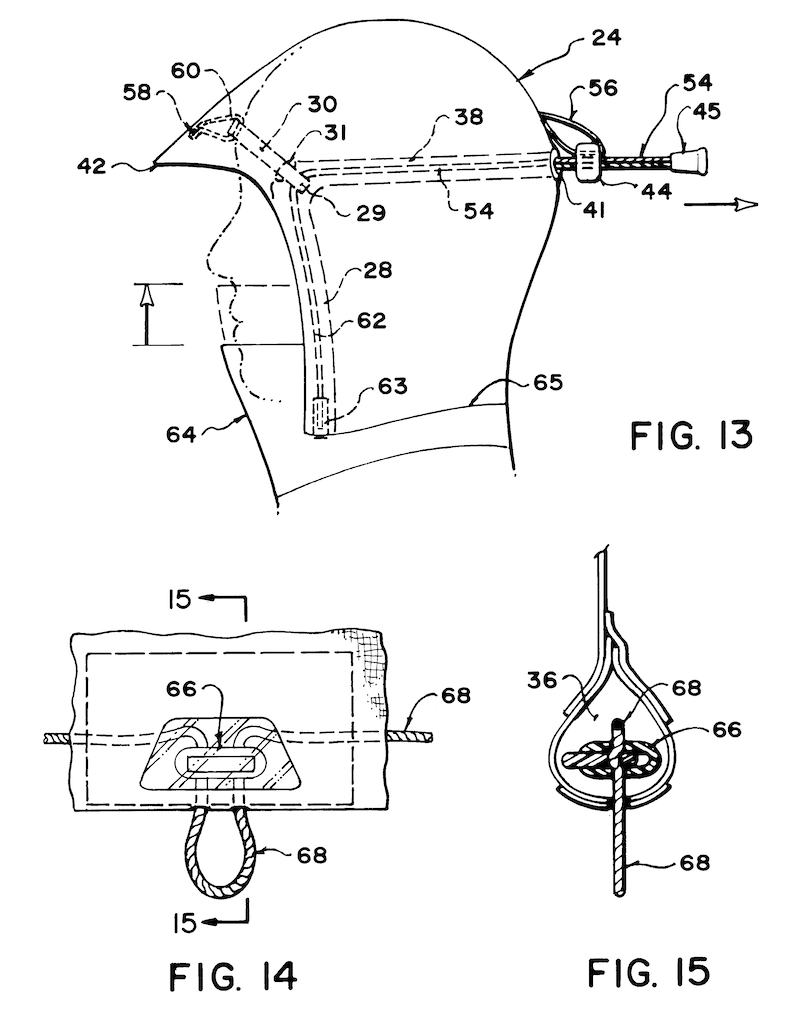
The third is laminated drawcord channels. Instead of sewn cord guides, which punch needle holes through the waterproof membrane, the drawstrings run through adhesive-bonded channels laminated to the hood interior.
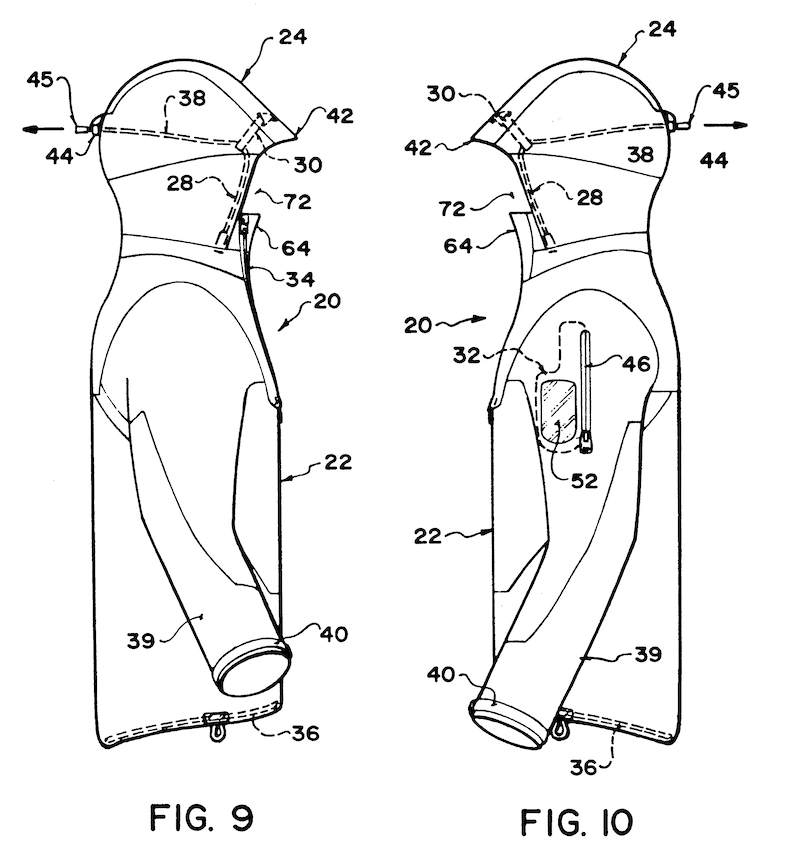
The WaterTight zipper itself took close to 15 years to solve fully. The breakthrough was flipping the zipper inside out, which gave a flat, even surface for the waterproof coating and improved durability.
Arc'teryx described it plainly at launch: "Designed for pure function, this is the ultimate alpine jacket." They weren't wrong. The jacket cost roughly $400 at launch and competed against shells from Mammut and The North Face that weighed considerably more for similar weather protection. Its arrival put established outerwear brands on the back foot. The next few seasons saw competitors scrambling to match its fit, seam construction, and weight.
How the Arc'teryx Alpha SV Evolved Year by Year
2001: GORE-TEX XCR, 708g
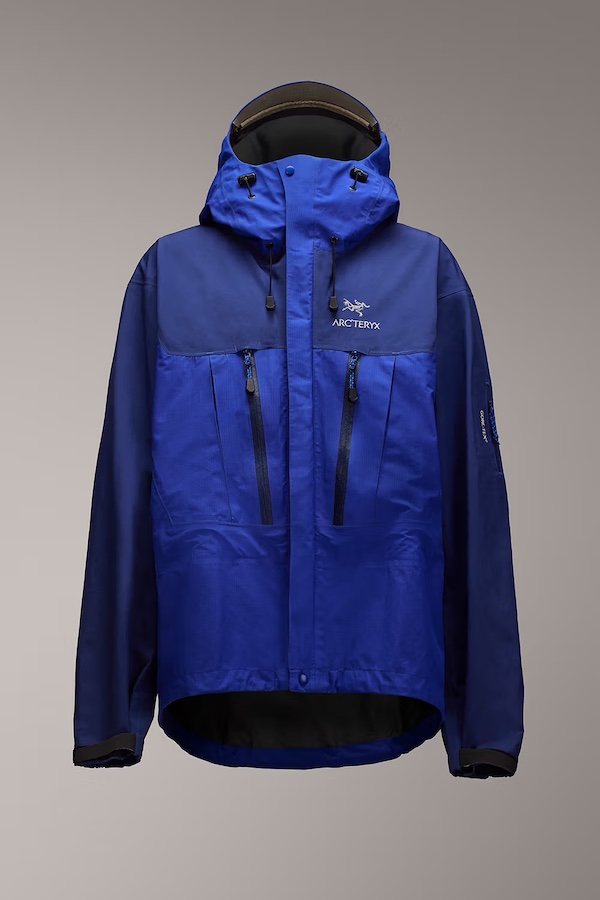
Arc'teryx swapped the original GORE-TEX 3-layer for GORE-TEX XCR, their first major membrane upgrade. Weight held at 708 grams. Colorways shifted to Cinder, Tabasco, and Too Blue. Arc'teryx also released the Alpha SV Suit during this period, combining a hardshell upper with a Polartec Power Shield softshell lower at 1,262 grams.
2002: Center Flap Eliminated, 708g
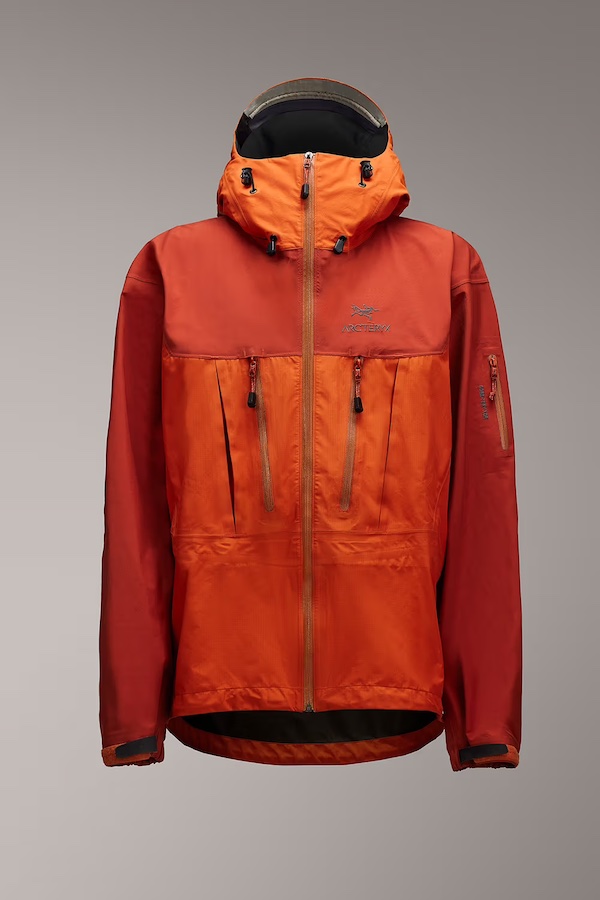
Not a carryover year. Arc'teryx applied the WaterTight zipper to the front zip, which eliminated the bulky center flap that had covered the main closure since 1998. Cleaner front profile, less bulk, one fewer failure point for water entry. The chest pockets switched to a box-pleat design, adding storage volume without protruding from the body. Better fit around the abdomen when the pockets were loaded. Same 708 grams, same GORE-TEX XCR. The Descent Line ski collection launched this year, but the Alpha SV stayed focused on its climbing roots.
2004: GORE-TEX XCR, 595g
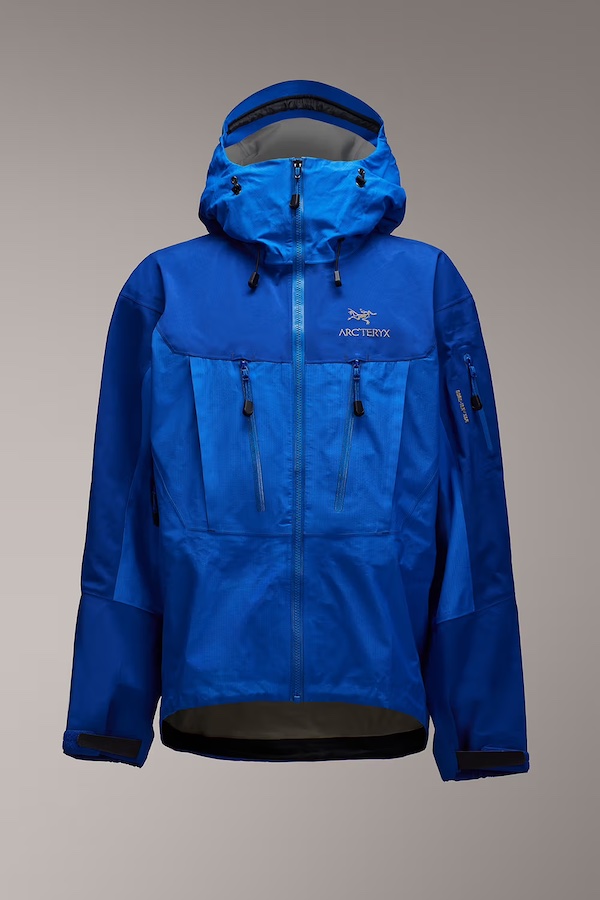
The first real weight drop. Men's medium fell from 708 to 595 grams, a 16% reduction. Arc'teryx achieved this through tighter seam allowances (down to 1/16 inch), new cutting techniques that reduced fabric waste and panel count, and the addition of a Vislon WaterTight front zip. Colors: Black, Azul, Sangria, Yam. Same 420NR and 530N GORE-TEX XCR construction held over, but the jacket became noticeably lighter without losing any reinforcement zones.
2007: GORE-TEX Pro Shell, 541g
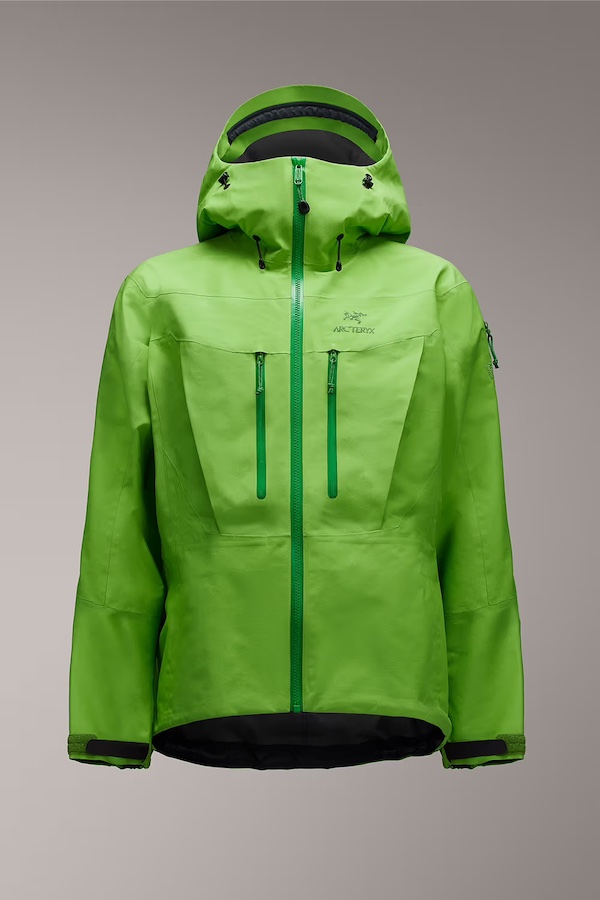
Bigger revision than the colorway rotation, it appears to be. Arc'teryx adopted the GORE-TEX Pro Shell, developed with Gore, dropping the weight by another 10% to 541 grams. The new membrane replaced XCR entirely. Stitching at transition areas was eliminated, and reducing the total seam count improved water resistance across the jacket. Colors rotated to Black, Mandarin, Azul, and Formula One for men, with Wasabi and Caesar for women. The Beta SV Jacket had joined the lineup by this point, giving climbers a shorter-cut alternative.
2013: GORE-TEX Pro, 490g
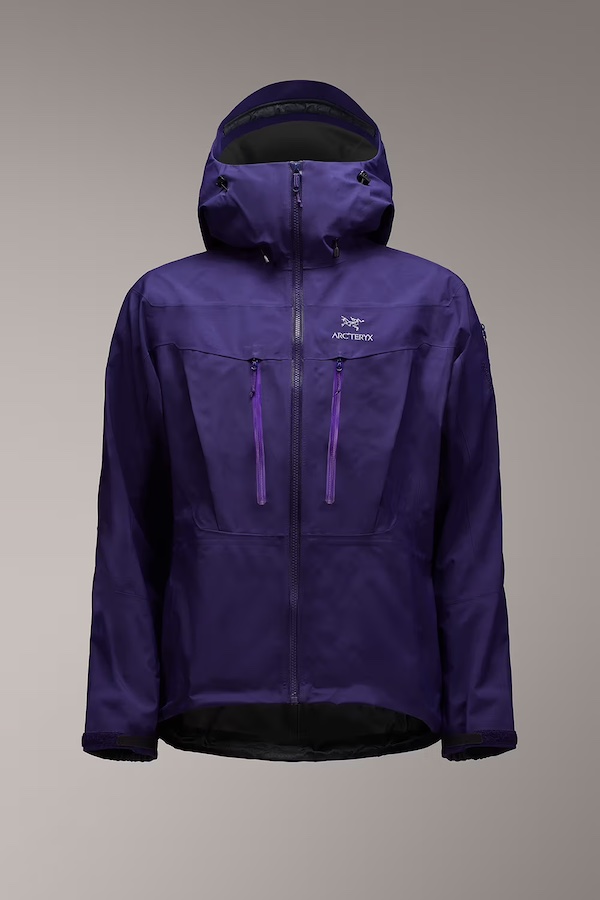
Arc'teryx transitioned the Alpha SV to N100p-X GORE-TEX Pro 3L. The Alpha SV Pro Jacket weighed 490 grams in Fall/Winter 2013, model 20234. A completely different fabric technology from the XCR years. Colors: Cardinal and Flare. This version introduced e3D patterning for improved climbing mobility and a new StormHood with a parallelogram geometry that rotates with the climber's head rather than covering their eyes when looking up. The old Structured Hood didn't do that.
2016: GORE-TEX Pro, 490g
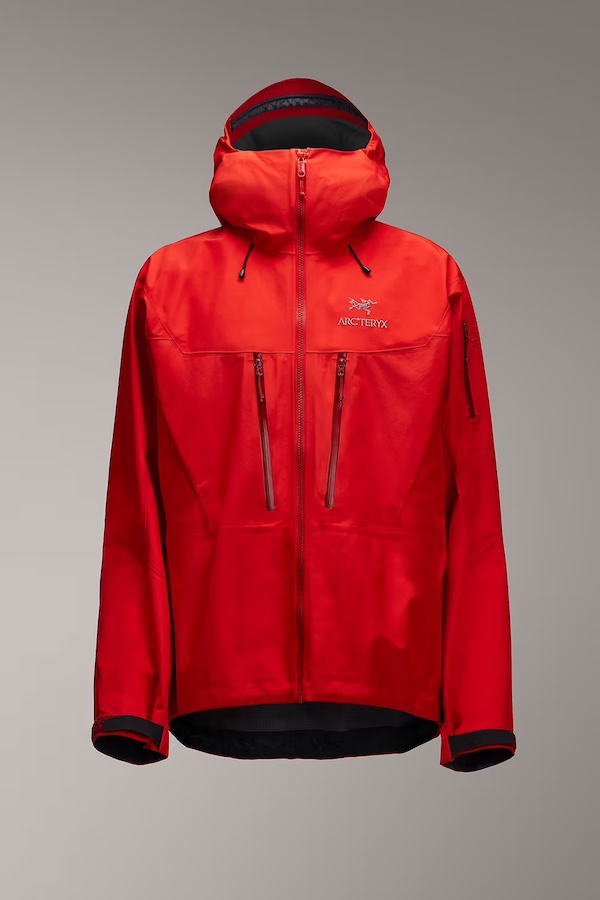
Arc'teryx called this one a complete renewal of all materials and parts. Model 18082 increased the face fabric from 80 to 100 denier, nearly doubling abrasion resistance. The seam tape shrank from 13mm to 8mm. The RS Zipper Slider replaced the old zipper garages entirely, and Cohaesive cord locks replaced the HemLock foam inserts. Arc'teryx also eliminated the elastic cuffs from the 2007 version and removed the extra sleeve seams added that same year. Still 490 grams. Colors expanded to Cardinal, Rigel, Inkwell, Pilot, and Black. Each jacket took 259 minutes and 217 individual steps to build at the ARC'One factory in Vancouver, including seven steps on the hood brim alone. It's still the last jacket Arc'teryx builds full-time in Canada.
2020: GORE-TEX PRO Most Rugged, 510g
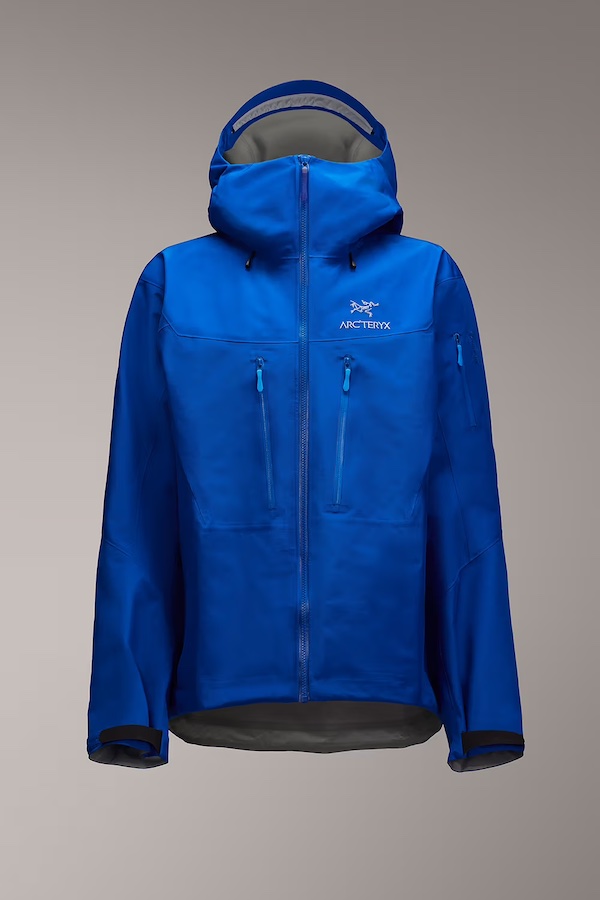
Arc'teryx upgraded to GORE-TEX PRO with Most Rugged Technology, model 25681, and the weight ticked up to 510 grams. Gore had launched its first Pro membrane in 2012, but Arc'teryx found more durability issues than any other Gore customer. Their users were just harder on gear. That feedback loop drove Most Rugged Technology. Colors: 24K Black, Dynasty, Glade, SMU-Orbit, Soulsonic, and Stratosphere. First Alpha SV with a RECCO reflector and custom TPU zipper pulls. Price jumped to $950. Arc'teryx also added a dope-dyed Micro Grid Backer inside, a thin, textured grid that resists abrasion and contamination while using less water than traditional dyeing.
2023: GORE-TEX PRO, 485g
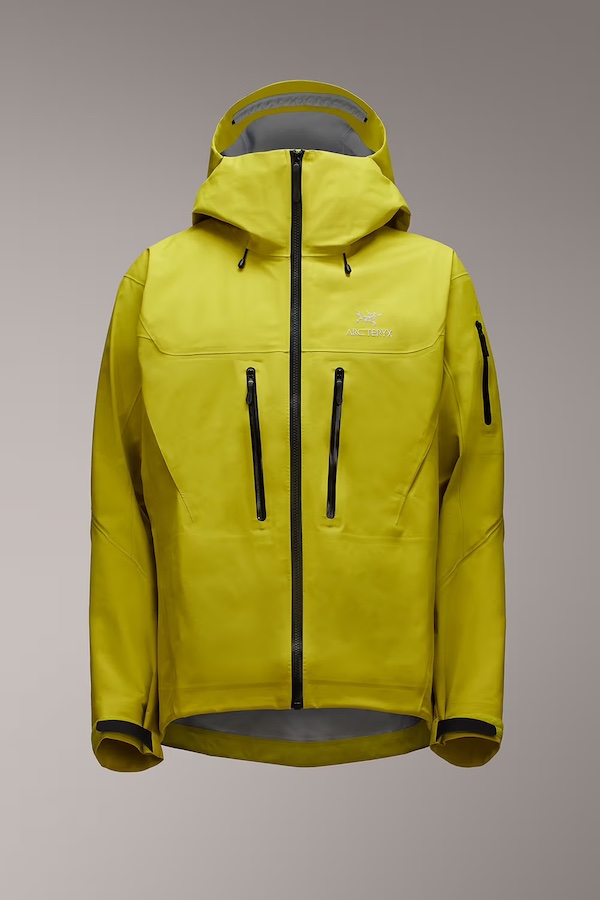
Arc'teryx overhauled the Alpha SV under model X000007319, dropping weight from 510 to 485 grams at $1,100. Colors included Black, Blue Tetra, Bordeaux, Dark Magic, and Lampyre. The 100D face fabric switched entirely to recycled content for the first time. Arc'teryx also redesigned the interior pockets for more usable storage and cut the jacket more roomily than previous versions. Construction changes focused on repairability, making seam repairs and patchwork easier for Arc'teryx's service centers.
2025: GORE-TEX Pro ePE, 485g (Current)
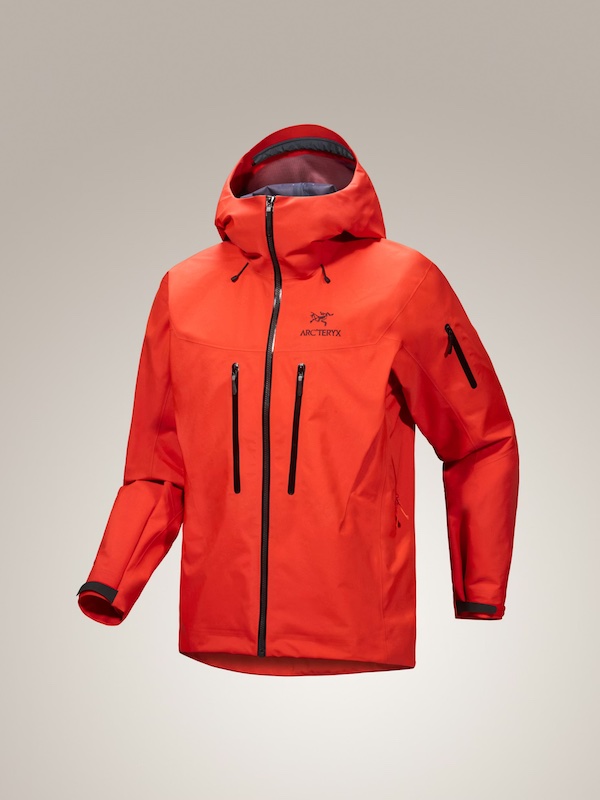
The current Alpha SV, model X000009899, drops to $900 at the same 485 grams. Lead designers JJ and Rebecca worked with Gore on a new ePE membrane sourced from post-consumer waste. To validate it, they built 50/50 prototype jackets with the new material on one half and the old on the other, then sent them through Gore's rain tower testing and 19 separate environmental tests before field trials with sponsored ice climbers.
Arc'teryx moved to 100-denier 3-layer GORE-TEX Pro ePE throughout, making the Alpha SV their first PFAS-free membrane. The face fabric is a 135gsm recycled nylon plain weave with an FC0 DWR finish. New internal storage includes two dump pockets and a zippered security pocket, plus the standard two harness-compatible chest pockets and one left bicep pocket. A RECCO reflector sits in the hood brim. Gore still allows Arc'teryx to develop their own face fabrics, a freedom most licensed brands don't get.
Arc'teryx Alpha SV Weight Timeline
The numbers tell the clearest version of this story. In 1998, the men's medium weighed 708 grams on GORE-TEX 3L. By 2004, GORE-TEX XCR brought it down to 595 grams. The 2007 GORE-TEX Pro Shell transition cut it to 541 grams. The 2013 revision trimmed it to 490. The 2020 Most Rugged version bumped slightly to 510 grams for added durability. The 2023 and current 2025 versions sit at 485 grams on the new ePE membrane.
That 223-gram reduction is roughly the weight of an ice tool. It happened while counterfeits flooded the market, trying to copy a jacket that kept changing beneath the surface. The construction innovations that made it lighter also made it harder to replicate accurately. Arc'teryx's warranty and repair team feeds failure data directly back to the design group, so each generation addresses specific breakdown points from the last. Sweat, sunscreen, and hair product oils were delaminating the neck area on older versions, which led to a reinforced double-layer collar.
From Climbing Tool to Cultural Object
Most technical shells have a five- to ten-year lifespan before the manufacturer replaces them with a new model. The Alpha SV keeps getting revised. Nine generations and counting. Arc'teryx's Design Director Greg Grenzke has said you can still see the original's design lineage in today's version. That's rare in an industry that loves clean-sheet redesigns.
The jacket crossed over from alpine climbing into fashion and streetwear somewhere around 2019. Virgil Abloh deconstructed several Alpha SVs for Off-White's FW20 collection. Aminé wore a custom-sprayed version with his own face. In December 2024, Arc'teryx opened a dedicated Alpha SV museum exhibition at the ARC'TERYX MUSEUM in Shanghai, displaying all nine generations side by side with a zipper history display tracing seam tape from 22mm to 8mm across 25 years. Visitors could wear the jacket inside an immersive simulation of Gore's rain tower testing. A climbing shell is treated like a museum piece.
The LEAF tactical division runs its own Alpha variants for military use, built on the same construction philosophy. At 27 years of continuous production, the Alpha SV is one of the longest-running technical shells from any manufacturer.
Anatomy of 27 Years
Arc’teryx Alpha SV · 1998 – 2025
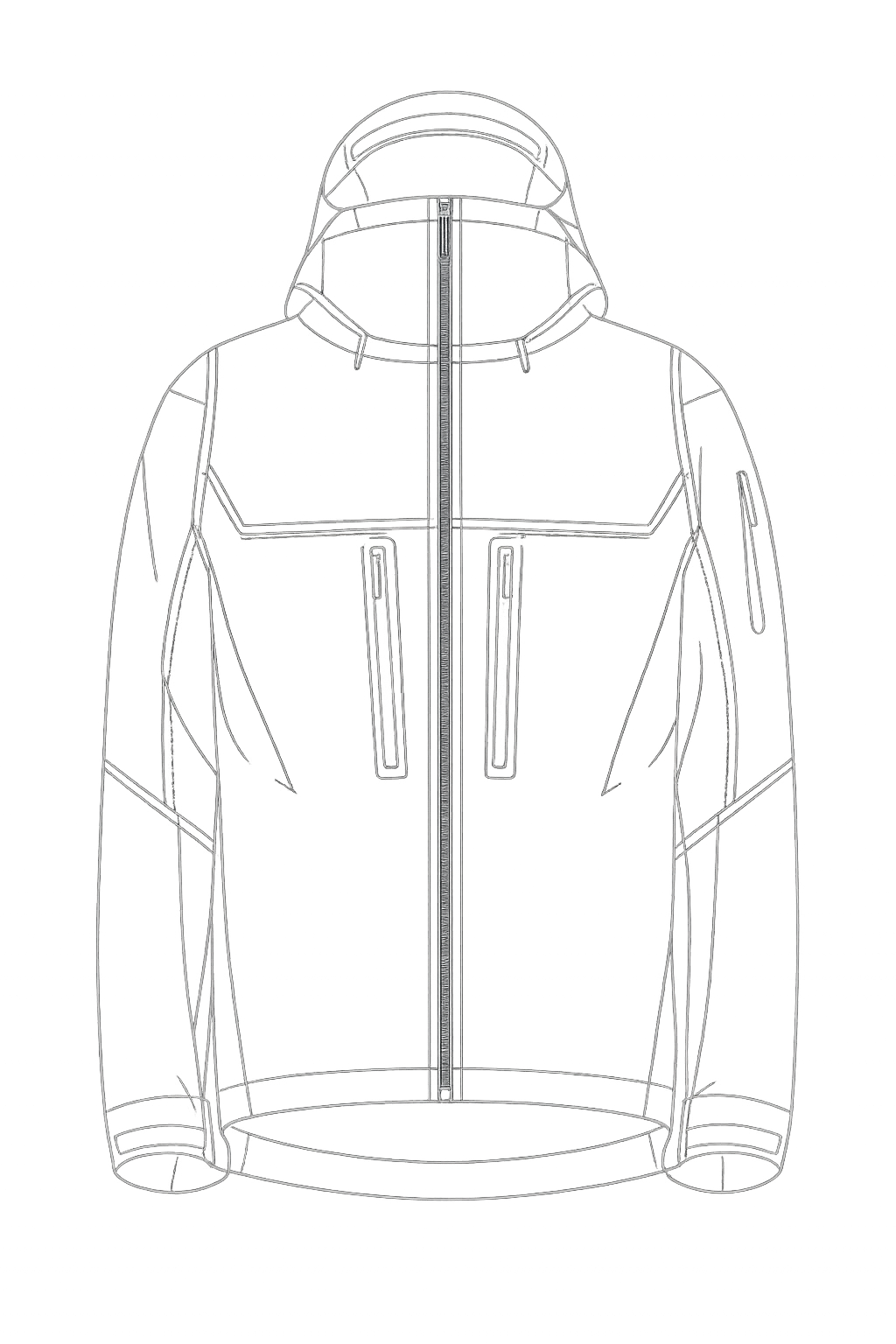
Select a hotspot on the jacket to explore how each component evolved across eight generations.